I have CT or MRI data
Begin with consultation. Imaging should be shared only when authorised and through the secure intake route or an approved private link.
Request imaging review →Bioink works with doctors, hospitals, patients, universities, and healthcare companies to assess the need, review available data, and define an appropriate 3D-printing pathway.
Bioink does not promise a printable result before reviewing the objective, data quality, intended use, deadline, and manufacturing constraints.
Begin with consultation. Imaging should be shared only when authorised and through the secure intake route or an approved private link.
Request imaging review →Upload STL, STEP, OBJ, 3MF, or a safe ZIP package for manufacturability review and quotation.
Submit a design file →Describe the challenge first. Bioink can help determine whether imaging, modelling, manufacturing, research, or another solution is appropriate.
Describe the challenge →Define the objective, intended use, decision-maker, and required deadline.
Assess imaging or design-file suitability and identify missing information.
Prepare selected anatomy where clinically and technically appropriate.
Confirm geometry, scale, colour, material, and manufacturing requirements.
Print, finish, assemble, and document the agreed output.
Review the physical output against the approved project requirements.
Arrange collection or delivery and close the documented project stage.
Submitted medical 3D projects receive a reference and private tracking key. The public tracker shows only limited operational status—not files, patient information, or internal notes.
Bone, joint, deformity, trauma, and multi-level planning models.
Skull, facial anatomy, reconstruction, and communication models.
Heart, vascular anatomy, congenital structures, and research models.
Cranial, spinal, and selected neuroanatomical visualisation projects.
Sinus, temporal bone, airway, and complex regional anatomy.
Patient-specific models adapted to paediatric anatomy and care pathways.
Repeatable anatomical models, procedural trainers, and teaching aids.
Custom geometry for studies, validation, prototypes, and device development.
The cards below are clearly presented as capability examples. Verified customer cases can later include approved objectives, images, outcomes, and permissions.

Capability example for anatomical communication, education, and planning discussions.
Discuss a similar need →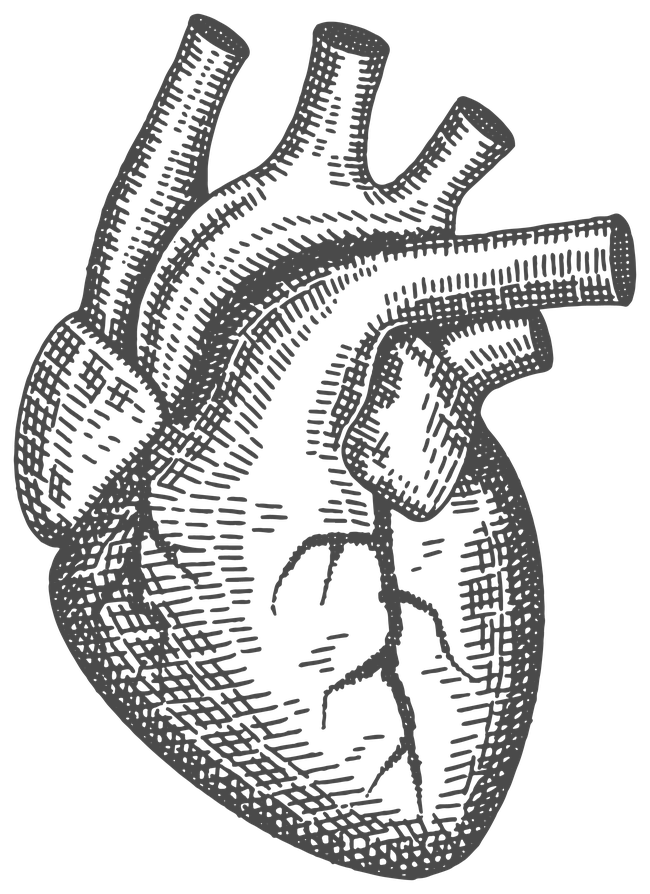
Capability example for patient-specific anatomy, education, and research review.
Discuss a similar need →
Capability example for deformity visualisation, training, and clinical communication.
Discuss a similar need →
Capability example for complex geometry, reconstruction discussions, and education.
Discuss a similar need →Explain the problem, intended use, anatomy, deadline, and who will review or approve the result.
CT or MRI may be provided as a safe ZIP package or through an approved private link. Design files may use STL, STEP, OBJ, or 3MF.
The submitter must be authorised to share the data. Remove unnecessary identifiers where possible and do not use ordinary email for sensitive imaging.
Prices are quotation-only for consultation-led projects. Work begins only after scope, responsibilities, timeline, and commercial terms are agreed.
Tell Bioink what needs to be understood, planned, communicated, taught, tested, or manufactured. The intake form will guide you through the information and files available today.